
Paper and board can be supplied in two fundamental formats: reels (sometimes called rolls or jumbo rolls) and sheets. For most folding carton converters and label printers, this decision is made once during equipment investment and rarely revisited. But for industrial buyers, distributors, and converters upgrading their equipment, the format decision carries significant cost implications that compound at scale.
What is a Reel Supply?
A reel is the base format in which paper and board leaves the mill. Master jumbo rolls can be 2,000–3,000 mm wide and several tonnes in weight. These are slit and rewound at processing facilities — like Pune Global Group's plant — into narrower parent reels sized to the converting machine's web width. A reel supply is continuous and fed directly into web-fed offset, flexo, or gravure presses, or into sheeter/die-cut machines.
Reel supply is the most material-efficient format. There is no cross-cut trim loss, and if your machine width is matched to a standard reel width (typically 860 mm, 1000 mm, 1270 mm, or 1524 mm), your conversion efficiency can reach 97–99%. For high-volume operations, this efficiency advantage compounds significantly.
What is a Sheet Supply?
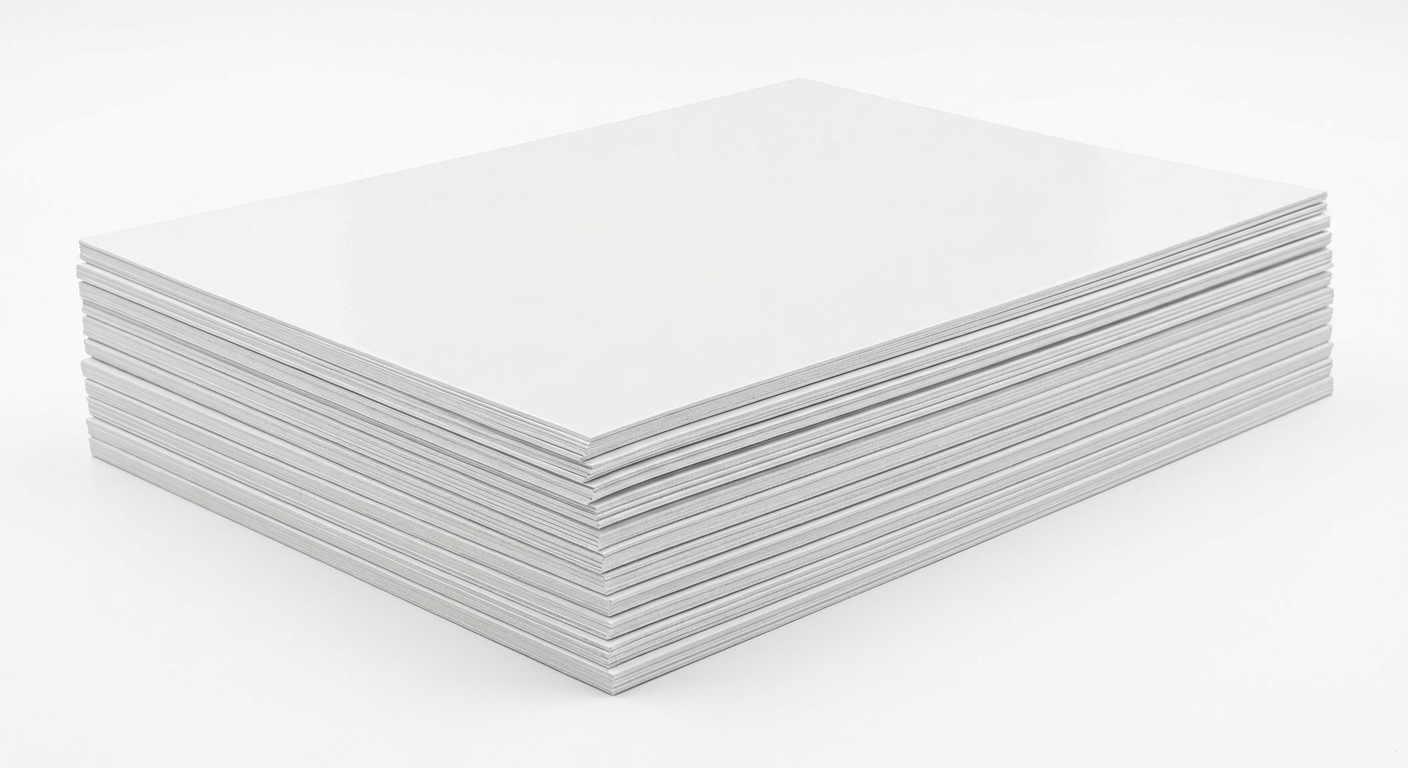
Sheets are produced by processing reels through a sheeter or synchro sheeter, cutting to a specified finished dimension. Standard sheet formats — SRA3, SRA2, SRA1, 70×100 cm — are stocked by most distributors. Custom sheet sizes are cut to order at processing facilities. Sheets are the standard supply format for sheet-fed offset presses and for converters without in-house sheeting capability.
The advantage of sheet supply is lower capital requirement and simpler material handling. A roll-fed press costs 40–60% more than a comparable sheet-fed machine. For converters at lower volumes, or those producing a wide variety of formats and sizes, sheet-fed operation with sheet supply is the rational choice.
The Waste and Cost Comparison
When Reel Supply is the Right Choice
- High-volume, long-run jobs on a single size or narrow range of sizes
- Web-fed gravure or flexo operations producing flexible packaging or labels
- Integrated sheeting: facilities that sheet in-house to exact job sizes, eliminating distributor sheet margins
- Narrow-web digital or flexo label converters requiring consistent tension properties
- Where material cost per tonne is the primary driver and capital is available for web-fed equipment
When Sheet Supply is the Right Choice
- Sheet-fed offset operations (the majority of folding carton converters in India)
- Short to medium runs with frequent format changes
- Buyers who lack sheeting equipment or space for reel storage
- Trial orders and sampling — minimum quantities are lower for standard sheet sizes
- Operations with space constraints: sheet pallets on floor-level racking vs reel storage requiring mandrel/A-frame systems
The Hybrid Approach: Reel Supply, In-House Sheeting
The most cost-effective model for mid-to-large converters is reel supply processed through an in-house sheeter or at a processing facility like Pune Global Group. In this model, you purchase board in reel format at reel pricing (which carries no sheet processing margin), and convert to exact job sizes at our plant. Our synchro sheeter produces print-quality sheets to ±0.5 mm tolerance from reels up to 1800 mm wide, with a 24–36 hour processing turnaround.
Compared to buying pre-cut standard sheets from a distributor, this approach typically reduces board cost by 8–15% on equivalent grades, because the sheet processing margin and standard-size waste are eliminated. For a converter consuming 100 tonnes per month of board, this is a material saving worth evaluating.
Explore Related Products
Apply What You've Learned
Talk to Our Packaging Experts
Have a specific board or packaging question? We give honest, technical answers — no upselling. Reach our team at any time.